Sinopsis
Marina travels to Vigo to meet the family of her biological father, who died of AIDS, like her mother, when she was very young. Through encounters with her uncles, aunts and grandparents, the young woman tries to reconstruct a story of her parents, but they all feel too much shame towards the couple's drug conflicts, something that Marina reminds them of with her presence. It will be the teenage love story that she lives with her cousin that allows her to reimagine her parents and connect with them. In this way, she invents a story, thanks to her mother's diary, which frees her from the stigma that her family feels for them and fulfils the desire to understand the past... A film about family memory that closes the trilogy of its director, made up of 'Summer 1993' and 'Alcarràs'.
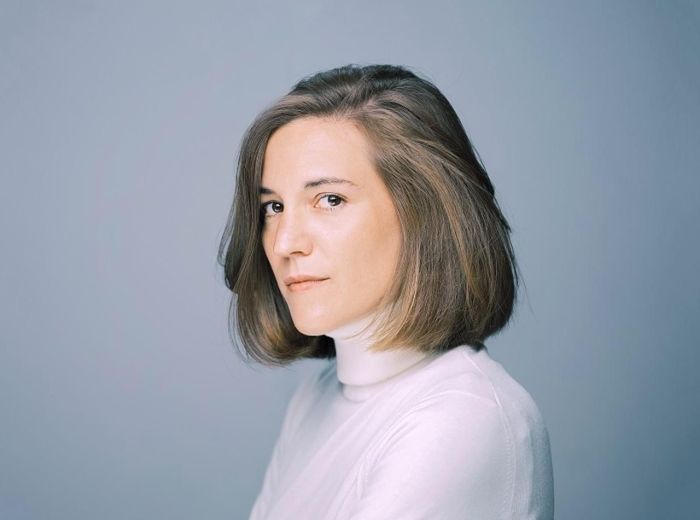

Carla Simón (Barcelona, 1986) es una de las voces más destacadas del cine español contemporáneo. Su obra se caracteriza por un fuerte componente autobiográfico y una mirada íntima a la familia, la memoria y el mundo rural catalán. Tras estudiar Comunicación Audiovisual en la Universitat Autònoma de Barcelona y completar su formación en la London Film School gracias a una beca, comenzó dirigiendo cortos y documentales, antes de dar el salto al largometraje.
Su debut llegó con “Verano 1993” (2017), relato inspirado en su propia infancia tras la muerte de sus padres por el SIDA. Con un estilo delicado y naturalista, la película narra la adaptación de una niña a su nueva vida con sus tíos en un entorno rural. La obra conquistó a crítica y público, fue seleccionada como candidata española a los Oscar y obtuvo el Premio a la Mejor Ópera Prima y el Gran Premio del Jurado en la sección Generation Kplus en la Berlinale 2017, además del Goya a Mejor Dirección Novel.
En “Alcarràs” (2022), Simón se adentró en la vida de una familia de agricultores de melocotones en el poniente catalán. Rodada con actores no profesionales, la película muestra con autenticidad la desaparición de un modo de vida amenazado por la modernidad. El filme hizo historia al ganar el Oso de Oro en el Festival de Berlín, siendo la primera vez que una directora española recibía este galardón.
Su tercer largometraje, “Romería” (2025), profundiza en la memoria familiar desde otra perspectiva: la búsqueda de una joven por conocer la historia de su padre biológico en Galicia. Presentada en la sección oficial de Cannes, la cinta cerró lo que muchos críticos llaman la “trilogía de la memoria familiar” de Simón, consolidándola como una cineasta de referencia en el panorama internacional.
A lo largo de su carrera ha recibido el Premio Nacional de Cinematografía (2023) y la Creu de Sant Jordi (2025), entre otros reconocimientos. Con un estilo poético y profundamente humano, Carla Simón ha convertido lo personal en universal, situando su cine en el centro de la conversación global
Carla Simón (Barcelona, 1986) is one of the most prominent voices in contemporary Spanish cinema. Her work is characterised by a strong autobiographical component and an intimate look at the family, memory and the Catalan rural world. After studying Audiovisual Communication at the Universitat Autònoma de Barcelona and completing her training at the London Film School thanks to a scholarship, she began directing short films and documentaries, before making the leap to feature films.
Her debut came with "Summer 1993" (2017), a story inspired by her own childhood after the death of her parents from AIDS. With a delicate and naturalistic style, the film narrates the adaptation of a girl to her new life with her aunt and uncle in a rural environment. The work conquered critics and audiences, was selected as a Spanish candidate for the Oscars and won the Best First Film Award and the Grand Jury Prize in the Generation Kplus section at the 2017 Berlinale, as well as the Goya for Best New Director.
In "Alcarràs" (2022), Simón delved into the life of a family of peach farmers in western Catalonia. Shot with non-professional actors, the film authentically shows the disappearance of a way of life threatened by modernity. The film made history by winning the Golden Bear at the Berlin Film Festival, the first time a Spanish director had received this award.
Her third feature film, "Romería" (2025), delves into family memory from another perspective: a young woman's search to know the story of her biological father in Galicia. Presented in the official section of Cannes, the film closed what many critics call Simon's "family memory trilogy", consolidating her as a filmmaker of reference on the international scene.
Throughout her career she has received the Spanish National Cinematography Award (2023) and the Creu de Sant Jordi (2025), among other recognitions. With a poetic and deeply human style, Carla Simón has turned the personal into the universal, placing her cinema at the centre of global conversation.
Year of Production: 2025
Time: 115’
Country: Spain
Language: Castilian and Catalan
Director: Carla Simón
Cast: Llúcia Garcia, Mitch, Tristán Ulloa, Celine Tyll, José Ángel Egido, Alberto Gracia
Production: María Zamora, Olimpia Pont Chàfer, Àngels Masclans
Script: Carla Simón
Director of Photography: Hélène Louvart
Production Companies: Elástica Films
International Sales: mk2 Films
Distribution: Elástica Films
Selected at Cannes Film Festival (Nominated for the Palme d'Or) and Sydney Film Festival (Nominated for the Sydney Film Prize for Best Film)